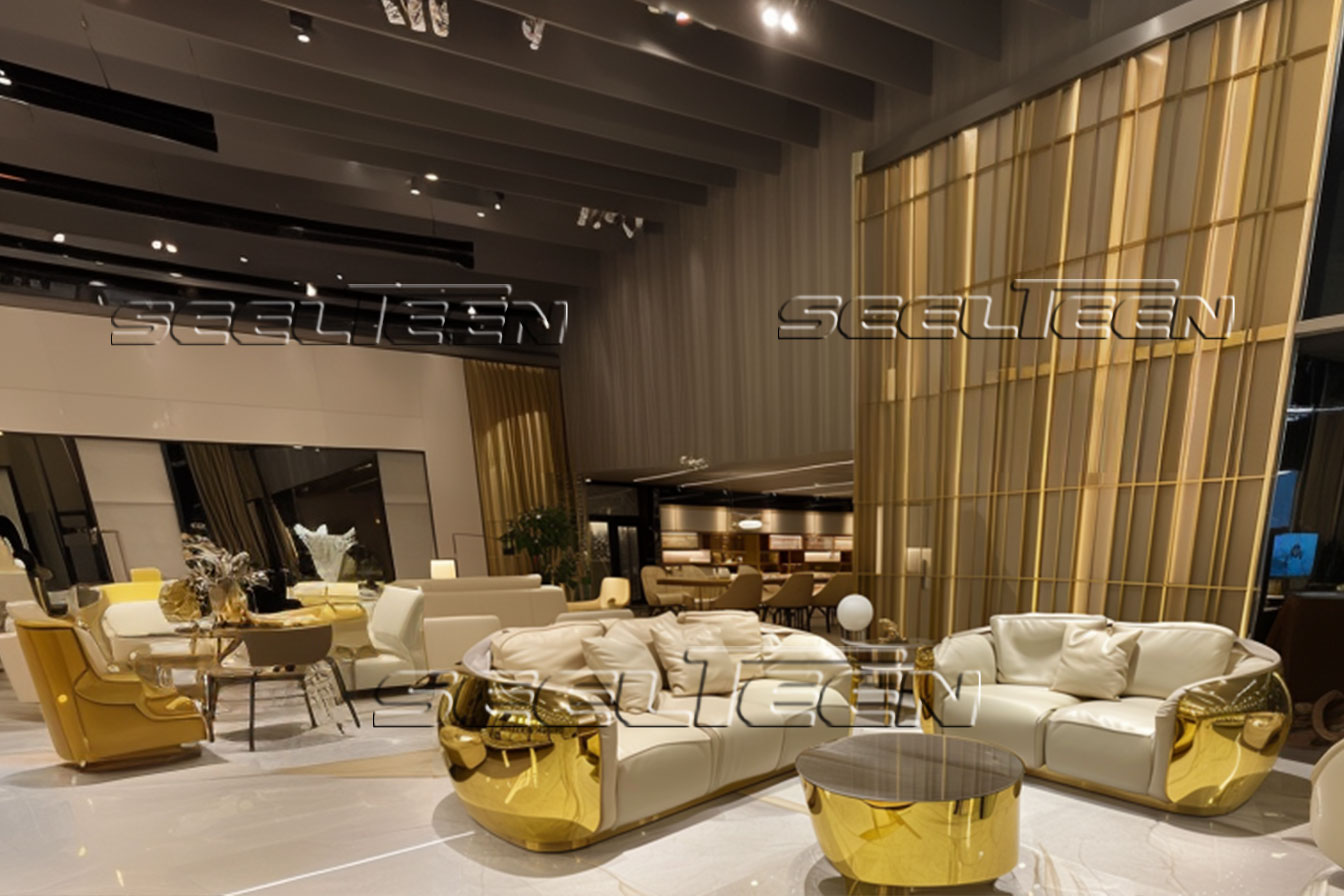
How to Choose the Right Sofa Frame Material for Hotel Lobbies: Stainless Steel vs Wood vs Iron
Most buyers pick a sofa by looking at the fabric first, the shape second, and the frame material somewhere around fifth or sixth — if at all. Then two years into a hotel’s operation, someone notices a joint has loosened, or a leg near the entrance has started to rust from mopping water, and suddenly frame material is the only thing anyone wants to talk about.
It’s worth talking about earlier than that. Here’s how the three most common options actually hold up.

Stainless Steel
This has become something close to the default for premium hospitality projects, and the reasoning is fairly straightforward once you’ve seen a few properties five years into operation.
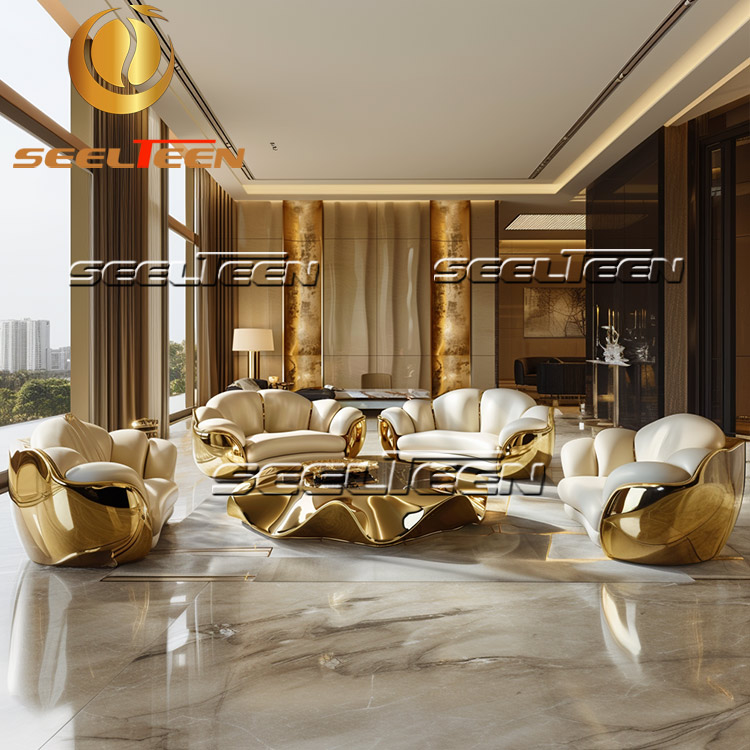
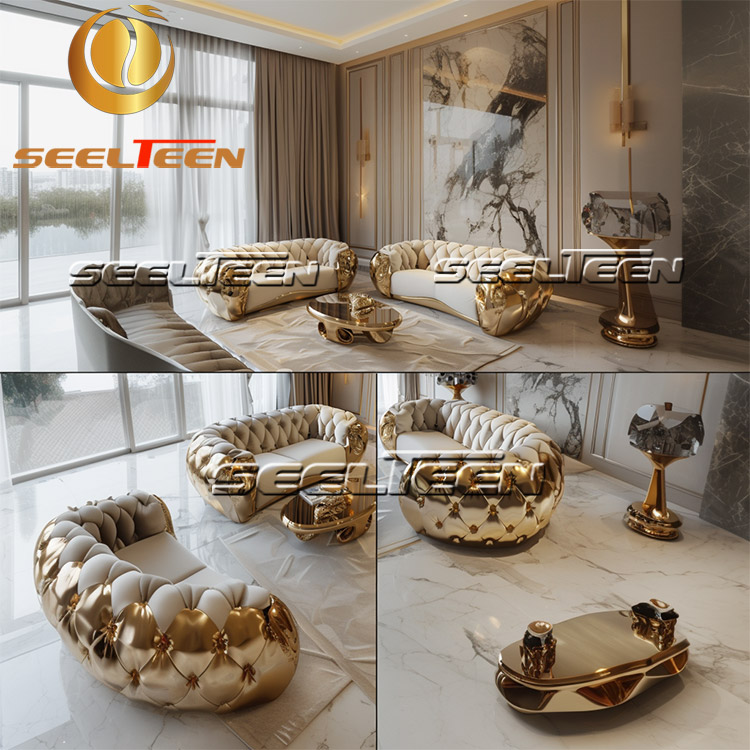
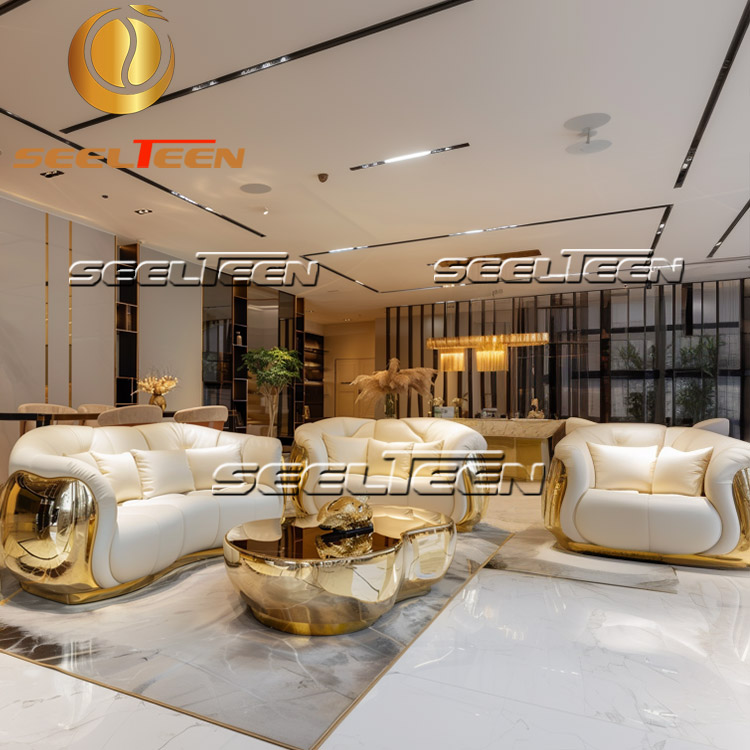
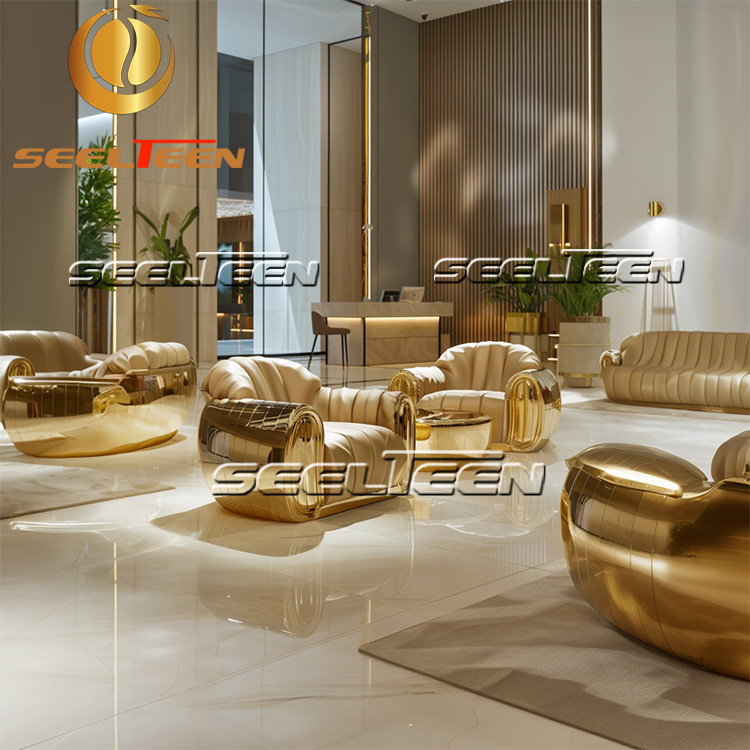
A steel frame doesn’t loosen the way wood joints can, and it shrugs off humidity — which matters more than people expect if the property is anywhere near a coast, or in a climate where the air conditioning cycles on and off all day. Finish options run from brushed to polished to gold-toned to matte black, so it fits into more or less any design language a project calls for.
The catch is cost. Steel frames run higher than the alternatives, partly because of the material and partly because you need a fabricator who actually knows how to weld, not just a furniture workshop that bolts things together. The frames are also heavier, which nudges shipping costs up a bit. For a lobby or a restaurant that sees constant foot traffic, most buyers decide the trade-off is worth it — the furniture still looks presentable at year five instead of needing reupholstering by year two.
Solid Wood
Wood still has a place, particularly in boutique hotels or villa projects going for something warmer and less “hospitality showroom.”
It reads as more residential, costs less than steel, and comes in a wide range of stains and finishes. The downside shows up mostly in climate-sensitive settings — humid regions or coastal properties tend to see wood joints loosen faster, and the maintenance schedule ends up being tighter than owners initially plan for. It also doesn’t lend itself as well to sharper, more geometric silhouettes, which matters if the interior design leans modern.
Wood tends to make the most sense for lower-traffic spaces, or properties where the aesthetic goal genuinely calls for it.
Powder-Coated Iron
Iron is usually where budget-driven projects land, and there’s nothing wrong with that as long as the trade-offs are understood going in.
It costs less upfront than either steel or wood, and it can be shaped into fairly decorative silhouettes without much trouble. The problem is the coating — once it chips or scratches, which happens eventually with commercial use, rust can creep in underneath, especially in humid environments. The finish also tends to read as a step down in refinement compared to steel, which is worth considering for a lobby or any space guests will actually sit in and inspect up close.
Iron works reasonably well for secondary seating areas, back-of-house furniture, or spaces with lighter foot traffic where budget matters more than longevity.
What to Ask Before You Order
A few questions tend to separate suppliers who understand commercial production from ones who are really set up for retail:
- What steel grade or gauge do you use, and is it appropriate for our region’s humidity?
- Can you send a physical finish sample before we commit to a full order?
- What happens if a frame issue shows up after installation — is there a warranty?
- Are joints welded in-house, or is that step outsourced?
If the answers come back vague, that’s usually a sign worth paying attention to.
Bottom Line
There isn’t a single right answer here — it comes down to how much traffic the space gets, the local climate, and what the budget allows. For lobbies and anywhere guests pass through constantly, stainless steel tends to pay for itself over the life of the property, even with the higher price tag going in.
If you’re weighing frame options for an upcoming project, we can send over physical samples and talk through what actually fits your climate and traffic level.
Welcome to contact us to get the latest price list!
Do you need to read another article? Please click on this: How to Source Custom Hotel Furniture from a China Factory: A Buyer’s Guide
Please find us on Facebook and Instagram, and don’t miss a single breath