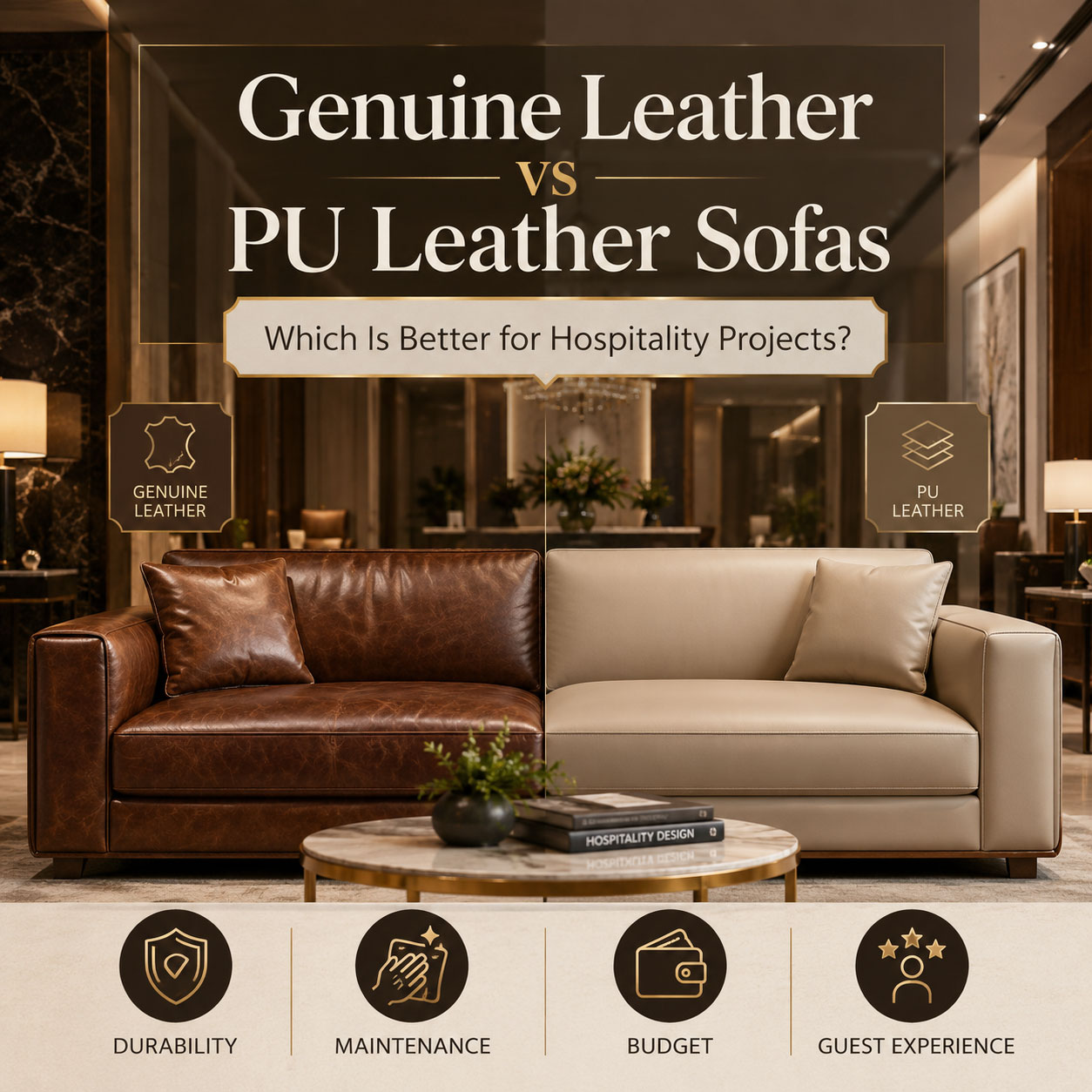
Genuine Leather vs PU Leather Sofas: Which Is Better for Hospitality Projects?
Ask ten hotel buyers whether they want genuine leather or PU leather and most will say genuine leather without thinking twice. It sounds like the obviously premium choice, and for a lot of projects it is. But “obviously premium” isn’t the same as “correct for this specific space,” and there are a fair number of hospitality projects where PU actually makes more sense once you look past the surface.
What Genuine Leather Actually Gets You
Real leather ages in a way synthetic materials don’t. It develops a slight patina over time, it breathes better against skin, and in most people’s eyes it just looks and feels more expensive — because it is. For a five-star lobby or a villa where guests are going to run their hand along the armrest, that tactile difference registers immediately.
It also holds up structurally better over the long run when it’s properly maintained. Small nicks and scuffs tend to blend into the material rather than becoming a permanent visible flaw, which matters in spaces that get touched constantly. The trade-off is price — genuine leather runs significantly higher than PU, sometimes double depending on the grade, and it needs actual maintenance. Conditioning every few months, prompt cleanup of spills, and keeping it out of direct sun for extended periods. Skip that upkeep in a high-traffic lobby and leather can dry out or crack faster than people expect, which somewhat undercuts the “it lasts forever” reputation.
What PU Leather Is Actually Good At
PU gets dismissed too quickly in a lot of conversations, mostly because people compare cheap PU to good leather instead of comparing it to what it’s actually competing against on price.
Modern PU has improved a lot — better texture, more consistent color, and coatings that resist water and light staining reasonably well. It’s more forgiving day to day: spills wipe off without much fuss, it doesn’t need conditioning, and it holds its color evenly since it’s manufactured rather than a natural hide with variation. For budget-driven projects, or secondary areas that don’t get the same guest attention as a main lobby, PU can look genuinely close to leather in photos and even in person from a few feet away.
Where it falls short is longevity under heavy commercial use. PU tends to crack or peel earlier than leather, usually somewhere in the 3-5 year range depending on quality and traffic, versus a decade or more for well-maintained genuine leather. Once it starts peeling, there’s no fixing it — the whole panel needs replacing, not just a spot repair.
How to Decide for Your Project
A few questions tend to clarify this faster than a straight price comparison:
How much daily contact will this piece actually get?
A lobby sectional that every guest sits on gets touched constantly — that’s where leather’s durability pays for itself. A decorative accent chair in a corner sees a fraction of that wear, and PU holds up fine there.
What’s the expected furniture lifecycle for this property?
Some hotel groups replace lobby furniture every 4-5 years as part of a broader refresh cycle anyway. If that’s already the plan, PU’s shorter lifespan may not actually cost you anything, since the piece was getting swapped out regardless.
Is this guest-facing or back-of-house?
Staff lounges, break rooms, and other non-guest spaces rarely need leather-grade materials. Save the budget for where guests actually see and touch the furniture.
What’s the climate?
Genuine leather in a humid environment needs more careful ventilation and conditioning than in a dry climate. If the property doesn’t have strong climate control in the furniture areas, that’s worth factoring in before committing to leather everywhere.
A Middle Option Worth Knowing About
Some manufacturers offer a hybrid approach — genuine leather on the seating surfaces where hands and bodies make contact, PU or another material on the back and sides that see less wear. It’s a reasonable way to get the tactile experience where it matters most while trimming material cost on the parts nobody touches. Worth asking your supplier whether this is something they can do, since it’s not always offered by default.
Bottom Line
For main guest-facing areas — lobbies, restaurant seating, suite living rooms — genuine leather generally justifies its cost over the life of the property. For secondary spaces, budget-driven projects, or properties on a shorter furniture refresh cycle, PU is a legitimate choice rather than a compromise, as long as expectations about its lifespan are set correctly from the start.
If you’re deciding between materials for a specific project, we can send physical samples of both so you can compare the feel directly before making the call.
Welcome to contact us to get the latest price list!
Do you need to read another article? Please click on this: What Hotel Buyers Should Know Before Ordering Custom Sofas
Please find us on Facebook and Instagram, and don’t miss a single breath