Bar Stool Height and Base Material Guide for Hotel Lounges and Rooftop Bars
Bar stools get treated as an afterthought more often than almost any other piece of hospitality furniture — picked last, ordered in a hurry once the bar counter itself is already built. Which is unfortunate, because getting the height wrong is one of the few furniture mistakes that’s genuinely hard to fix afterward without either replacing the stools or, worse, redoing the counter.
Getting the Height Right Actually Comes First
There are really two standard categories, and the terms get used loosely enough that it’s worth confirming the exact numbers with a supplier rather than assuming.
Counter height, typically seating around 24-26 inches from floor to seat, pairs with counters roughly 34-36 inches tall — think kitchen islands or lower lounge counters. Bar height, usually 28-30 inches at the seat, pairs with counters or bar tops around 40-42 inches. The gap between seat height and counter height should generally land around 10-12 inches to leave comfortable knee clearance; get that gap wrong and the stool feels awkward no matter how good it looks.
Rooftop bars and hotel lounges sometimes mix both heights intentionally — bar height along the main counter, counter height at lower lounge tables scattered around the space. That’s a reasonable approach as long as you plan it from the start rather than improvising because the wrong stools showed up.
The other detail that gets missed: swivel and footrest placement. A stool without a footrest at bar height leaves guests’ legs dangling uncomfortably, especially over a longer sit. Swivel bases add comfort for a social bar setting but need a wider base footprint for stability, which matters if floor space is tight.
Base Material Options
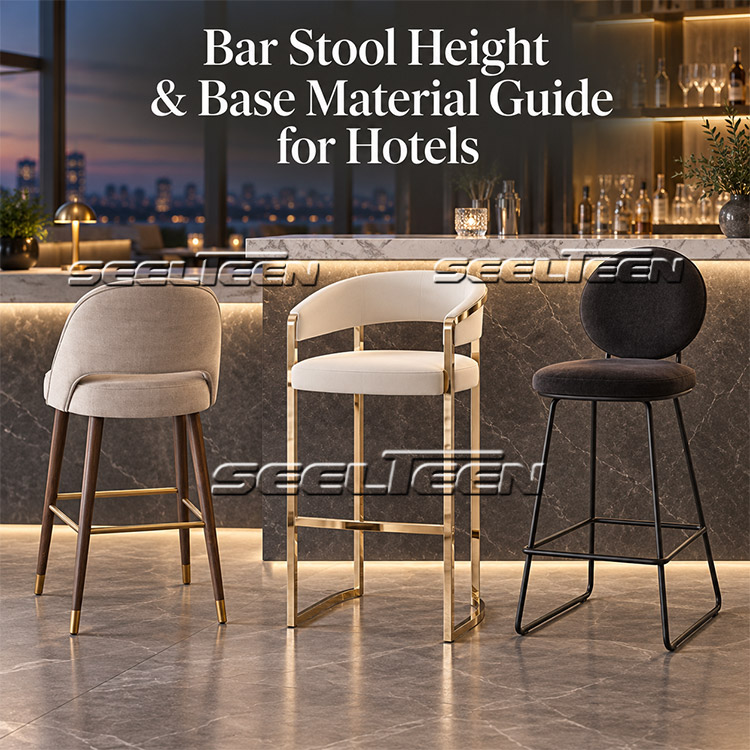
Stainless steel bases hold up best under the kind of daily wear a hotel bar sees — constant swiveling, guests kicking the base, spills and cleaning chemicals. They also resist humidity well, which matters specifically for rooftop and outdoor-adjacent bars where steel’s corrosion resistance becomes a real functional requirement rather than just a style choice. Finish options run from brushed to polished to gold, matching the same range available on sofa frames, so a bar area can carry a consistent metal finish throughout the space.
Wood bases suit a warmer, more boutique bar aesthetic, and cost less than steel. They’re a reasonable fit for indoor lounges with moderate traffic, but outdoor or rooftop exposure is a real problem for wood — sun and moisture exposure degrade it faster than an indoor setting would, so wood bases are generally not the right call for anything genuinely outdoor-facing.
Powder-coated iron sits in the middle on cost, and works fine for indoor bars with moderate use. The same rust vulnerability that applies to iron sofa frames applies here too, and it shows up faster on a piece that gets kicked, bumped, and scraped as often as a bar stool does.
For a rooftop bar specifically, stainless steel is close to the default recommendation — the combination of weather exposure and constant guest contact makes the durability gap between steel and the alternatives wider than it would be in a climate-controlled indoor lounge.
Upholstery and Seat Material
The seat surface takes more direct, repeated contact than almost any other point in a bar setting. Genuine leather looks and feels premium but needs more maintenance in a bar environment where spills happen often. PU leather or a performance fabric rated for commercial use tends to be a more practical choice for bar seating specifically, even in properties that use genuine leather elsewhere — the trade-off between look and maintenance shifts when a seat gets sat on and spilled on constantly throughout a single evening.
A Few Things to Confirm Before Ordering
- What’s the exact seat height and does it match the counter height already installed or planned?
- Is the base rated for outdoor or humid exposure, if the bar is rooftop or open-air?
- Does the swivel mechanism have a weight rating suited to commercial use?
- What’s the footrest height, and does it work for the range of guest heights realistically using the space?
Bottom Line
Height compatibility with the counter matters more than almost any other decision here, and it’s the hardest to fix after the fact. Beyond that, base material should match the environment — steel for anything outdoor or heavily trafficked, wood or iron reserved for calmer indoor settings where the durability gap matters less.
If you’re finalizing a bar or lounge area, send over your counter height and whether the space is indoor or outdoor, and we can recommend stool dimensions and base material that actually fit.
Welcome to contact us to get the latest price list!
Do you need to read another article? Please click on this: Curved Sofa vs Modular Sofa: Which Fits Your Hotel Lounge
Please find us on Facebook and Instagram, and don’t miss a single update