Furnishing a Full Hotel: One Design Language
Most hotels don’t get furnished all at once by one person with one clear vision. The lobby gets specified by the interior designer, the restaurant by a separate consultant, guest rooms by the owner’s procurement team working from a budget. Each decision makes sense on its own. Then the property opens and something feels slightly off — the lobby is warm and layered, the restaurant is cold and industrial, the rooms feel like they belong to a different building entirely.
That disconnect is usually less a design failure than a coordination one. Here’s how to avoid it.
Start With a Material and Finish Palette, Not a Furniture List
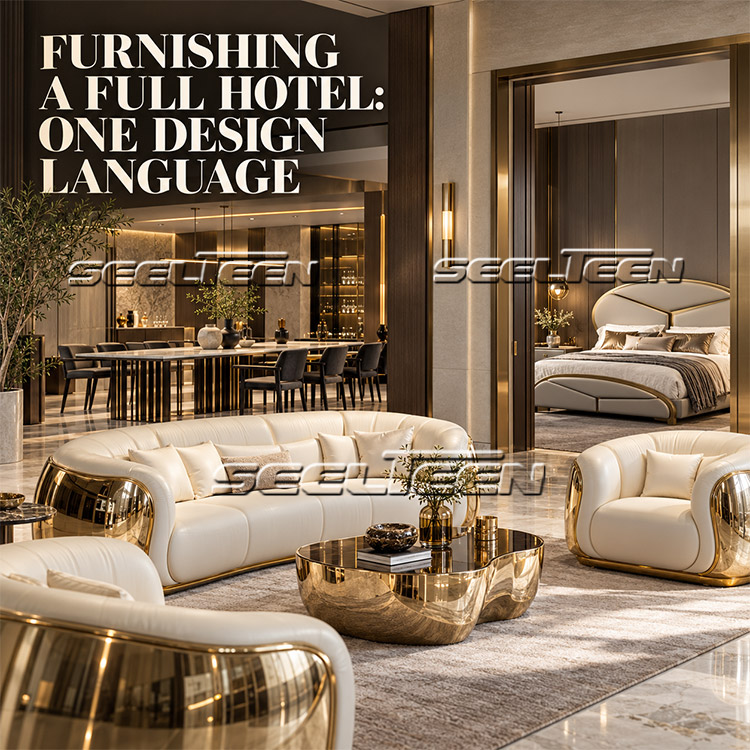
The most reliable way to keep a property coherent is to decide on a small set of repeating materials before anyone picks individual pieces. Something like: one metal finish, one or two upholstery materials, one wood tone, and a short list of accent colors. Every furniture category then draws from that same palette instead of reinventing it.
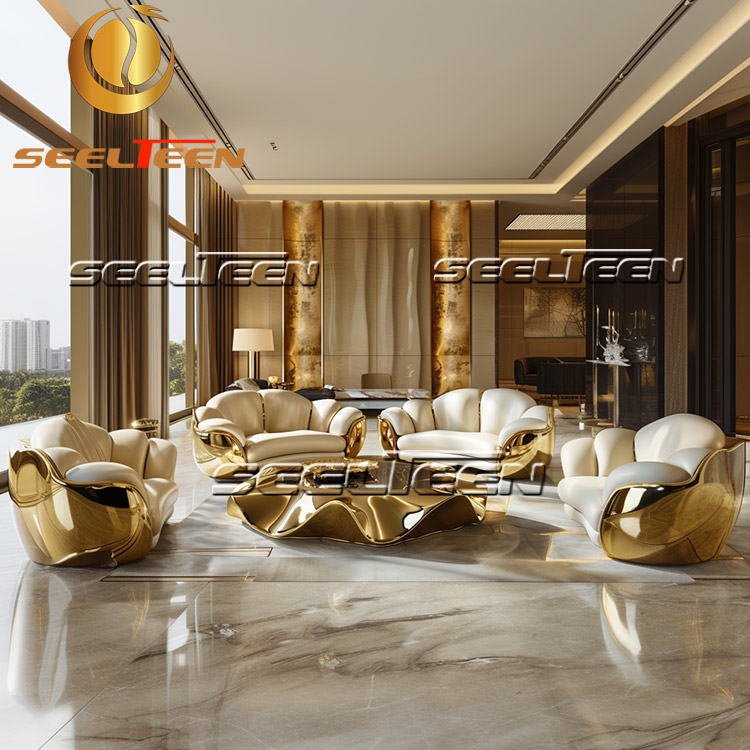
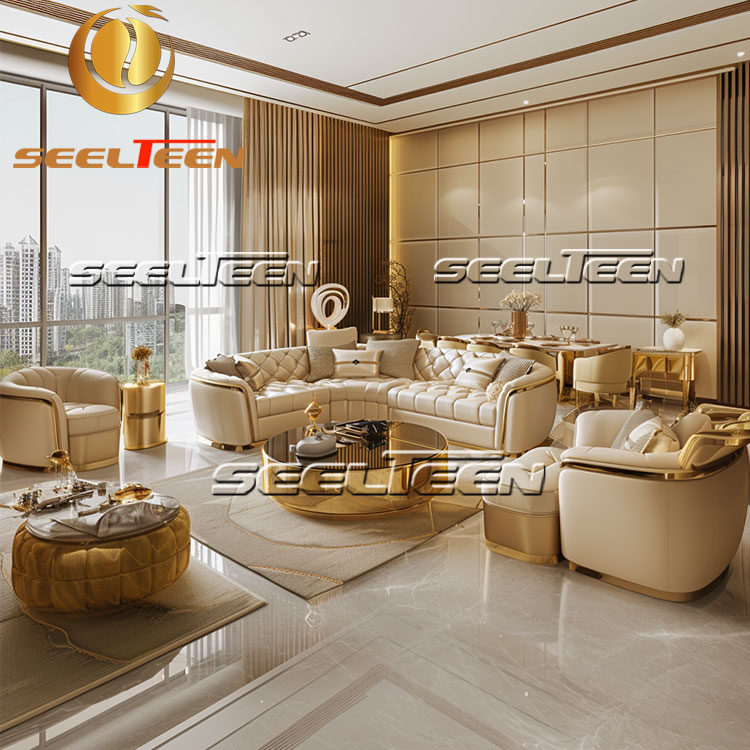
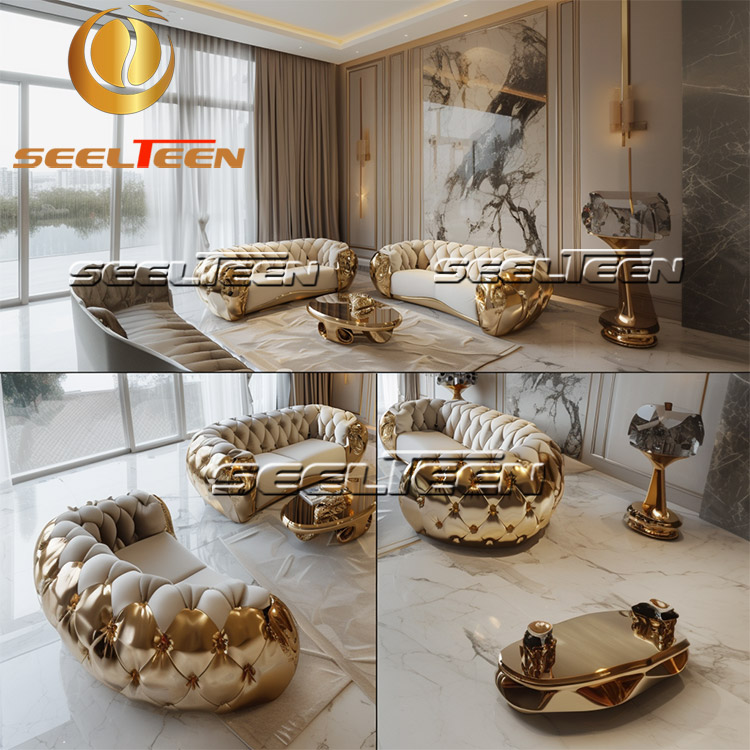
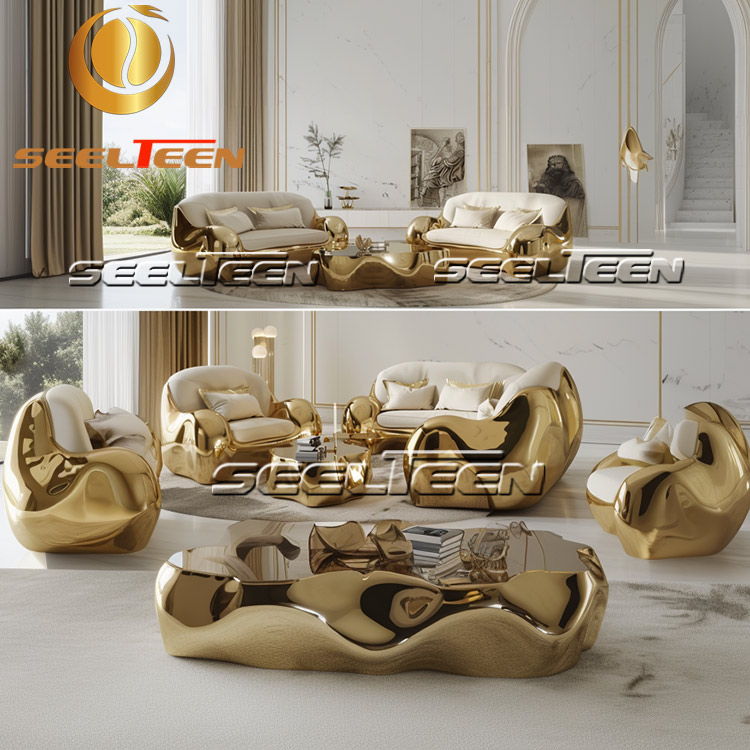
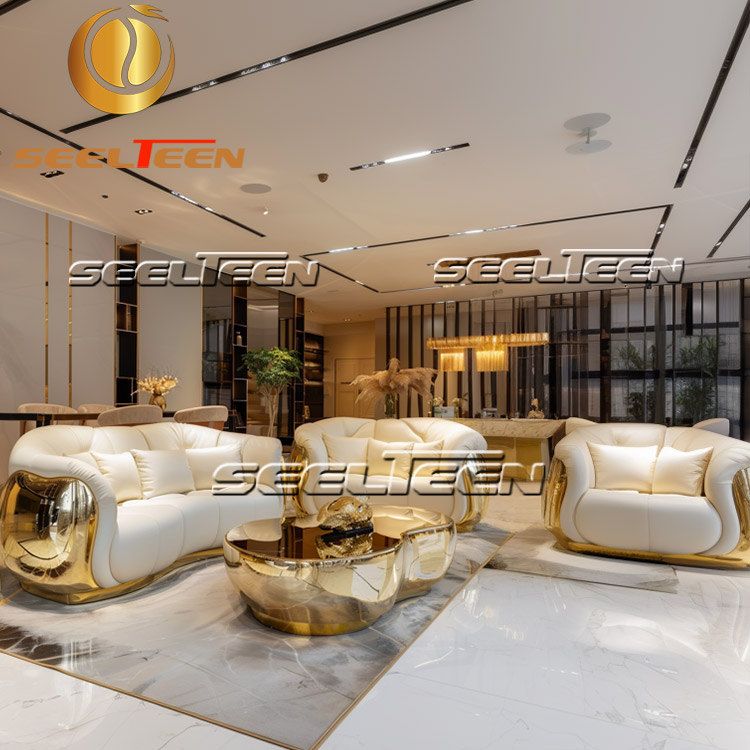
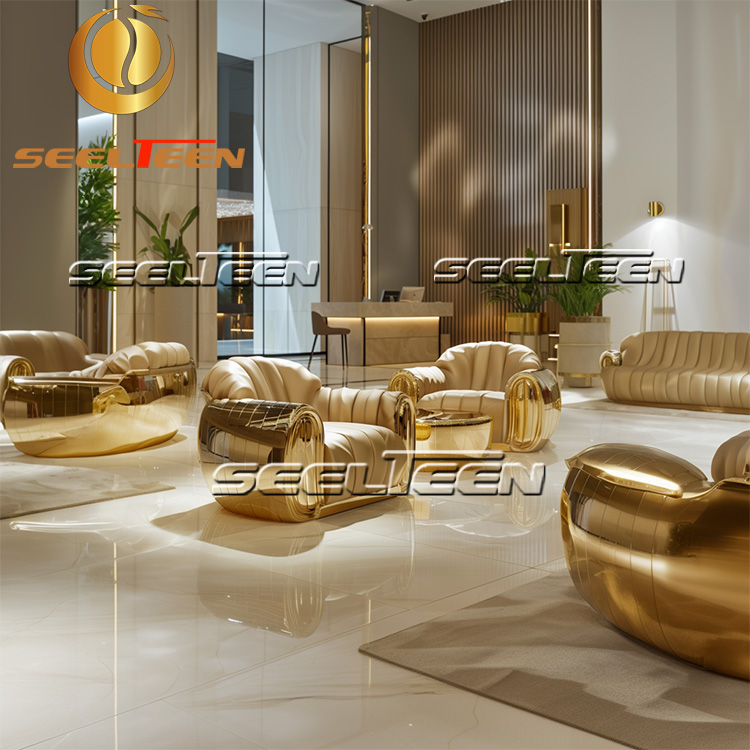
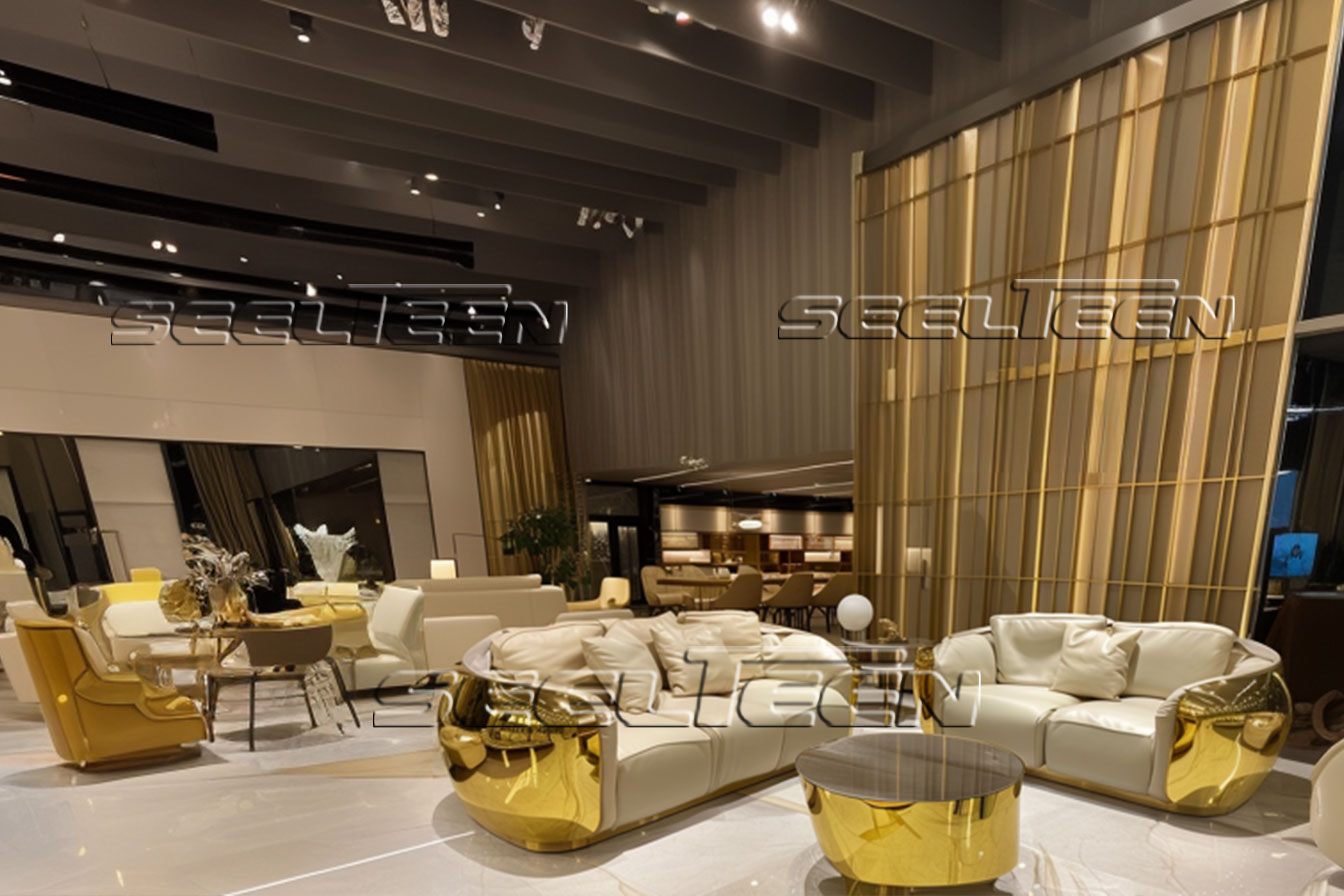
If the lobby sofas use a brushed gold stainless steel base, the same finish showing up on restaurant chair legs, bar stool bases, and a bed frame detail in the guest rooms ties the spaces together without anyone having to consciously notice it. Guests rarely say “the metal finish is consistent across the property.” They just feel that it hangs together.
Different Spaces Need Different Durability, Not Different Looks
This is where coordination gets practical. A lobby sofa, a restaurant dining chair, and a guest room headboard face very different wear conditions, but they don’t need to look like they came from different suppliers. Frame material and construction can change to match the use — heavy-duty steel in high-traffic public areas, a lighter build for guest rooms — while the visible design language stays consistent.
Upholstery follows the same logic. Genuine leather in the lobby where guests touch and see it constantly, a commercial-grade PU or performance fabric in the restaurant where spills are a daily reality, and a matching tone in guest rooms keeps the color story consistent even though the actual materials differ underneath. The look stays unified; the engineering underneath adapts to the space.
Scale and Proportion Shift Between Spaces
A mistake that shows up often is using the same proportions everywhere. Lobby furniture can afford to be large, sculptural, and statement-making because the space around it is generous. Guest room furniture in the same oversized proportions would crowd the room. Restaurant seating needs to prioritize comfort for a ninety-minute meal rather than visual drama.
Keeping the design language consistent doesn’t mean scaling the same piece up or down. It means carrying the same details — a curve, a leg shape, a stitching pattern, a metal accent — through pieces that are each sized for their own context.
Think About the Transitions Between Spaces
Guests move through a property in sequence: arrival, lobby, elevator, corridor, room. The corridors and transition spaces are easy to neglect in furniture planning, but they’re where inconsistency becomes most noticeable. If a guest steps out of a lobby with gold accents and warm leather into a corridor furnished with unrelated pieces and then into a room with a third look, the shift registers even if they can’t say why.
Even small touches — a console table in a corridor that echoes the lobby’s metal finish, a consistent hardware style on every door and drawer — keep that thread running through the whole journey.
Ordering From One Supplier vs Splitting the Order
There’s a practical side to all this. Sourcing across several suppliers makes matching finishes and tones much harder, since metal plating, leather dye lots, and wood stains vary between factories even when specs look identical on paper. A single manufacturer producing the full furniture package, or at least the pieces that need to visually match, can control finish consistency in a way that separate suppliers can’t easily replicate.
The trade-off is that no single factory is equally strong at every category. For a larger property, it’s reasonable to split between suppliers for categories where visual matching matters less, while keeping the highly visible, coordinated pieces — lobby seating, restaurant furniture, headboards — with one manufacturer. Whatever the split, approve finish samples from every supplier side by side before production starts, not after delivery.
Plan the Timeline for the Whole Property, Not Per Category
Lead times differ by category, and a hotel opening date doesn’t move for them. A full-property order needs one master timeline that works backward from opening day, accounting for sampling, production, shipping, and installation across all categories, with enough buffer that a delay in one doesn’t leave an entire floor unfurnished. Staggering deliveries — lobby and public areas first, then dining, then guest rooms in phases — is common for larger projects and eases the pressure on installation crews.
Questions Worth Asking a Supplier for a Full-Property Project
- Can you produce coordinated finishes across sofas, dining furniture, bar seating, and bedroom pieces within one order?
- How do you maintain color and finish consistency across different product categories and production batches?
- Can you stage deliveries to match our construction and installation schedule?
- Do you provide a single point of contact for a multi-category project, or do we coordinate separately by category?
Bottom Line
A hotel that feels cohesive usually got there through early decisions about materials, finishes, and proportion — not through luck at the end. Agree on the palette first, let construction adapt to each space’s wear, carry a few signature details through every category, and keep the visually critical pieces with a supplier who can control consistency.
If you’re planning furniture for an entire property, send over your floor plan and design direction and we can talk through how to coordinate the package across lobby, dining, and guest rooms.
Welcome to contact us to get the latest price list!
Do you need to read another article? Please click on this: Modern Hotel Bed Frames: Metal, Upholstered and Wood
Please find us on Facebook and Instagram, and don’t miss a single update