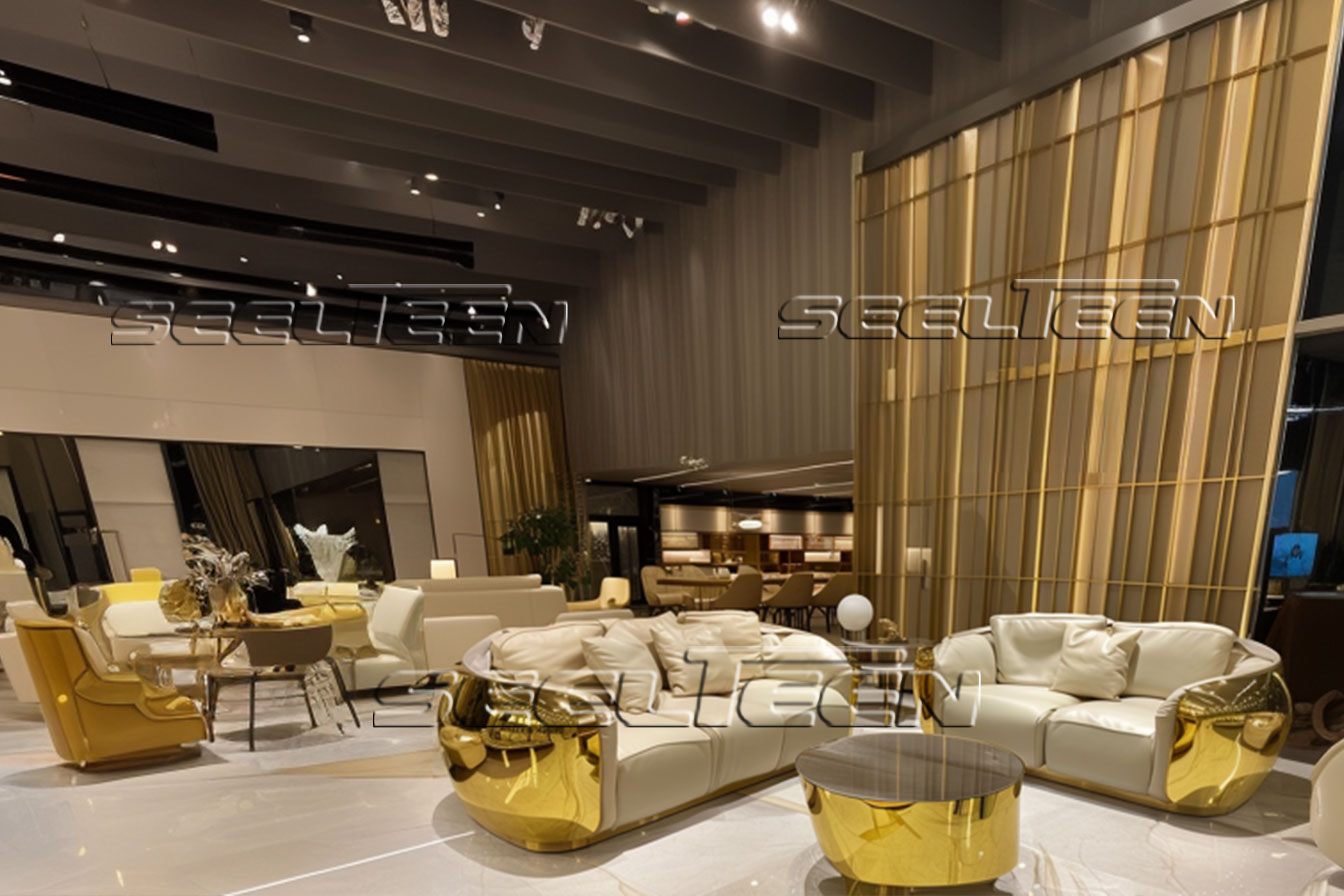
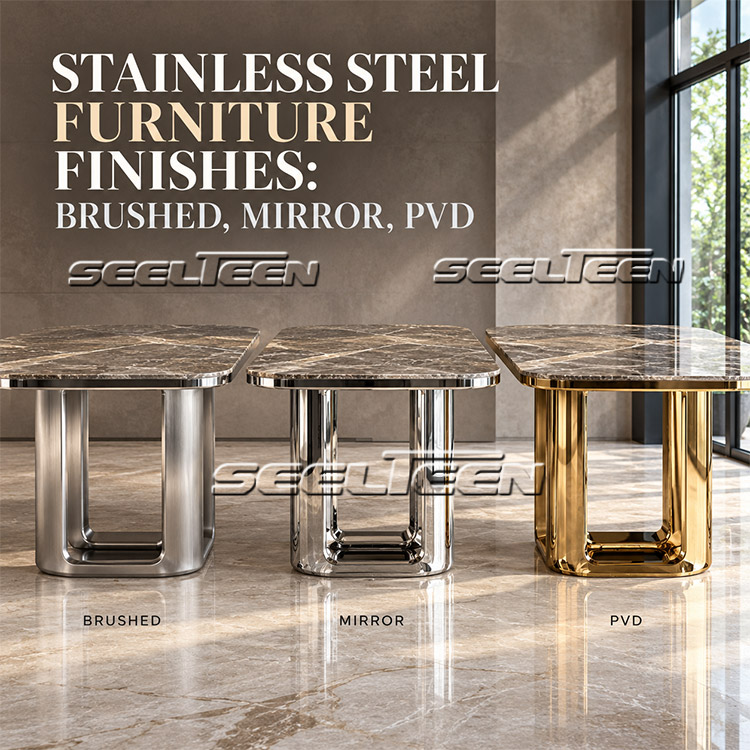
Stainless Steel Furniture Finishes: Brushed, Mirror, PVD
Two stainless steel tables can come from the same grade of steel and look nothing alike. One is soft and satin. One is bright as a mirror. One is a warm champagne gold. The metal is the same. The finish is what changes, and the finish decides how the piece looks on day one, how it ages in a busy hotel, and how much work it takes to keep clean.
If you’re ordering stainless steel furniture for a hotel, restaurant, or villa, the finish is worth as much attention as the shape. This guide covers the common options, what each one is good at, and what to ask for before you approve a batch.
Finish Sits on Top of the Metal
First, a quick separation. The base metal and the finish are two different decisions.
The base metal is the stainless steel itself, and its grade affects corrosion resistance. The finish is how the surface is polished, textured, or coated. A brushed finish and a mirror finish can sit on the same steel. A colored coating can sit over either.
Keep them apart in your head and the conversation with a factory gets much clearer.
Brushed (Hairline): The Practical Default
A brushed finish has fine, straight lines in one direction, made by abrasive polishing. It looks soft and modern, and it’s the finish most people picture on commercial stainless steel.
Its big advantage in hospitality is how it handles daily life. Fingerprints and light scuffs show up far less than on a mirror surface, so the piece looks clean between wipe-downs. Small scratches follow the direction of the grain and tend to blend in.
It has one habit worth knowing: it has a direction. Clean along the grain, not across it, and ask the factory to keep the grain direction consistent across pieces in the same room. A table with grain running one way next to a bench running the other can look off.
Mirror: Dramatic, and Demanding
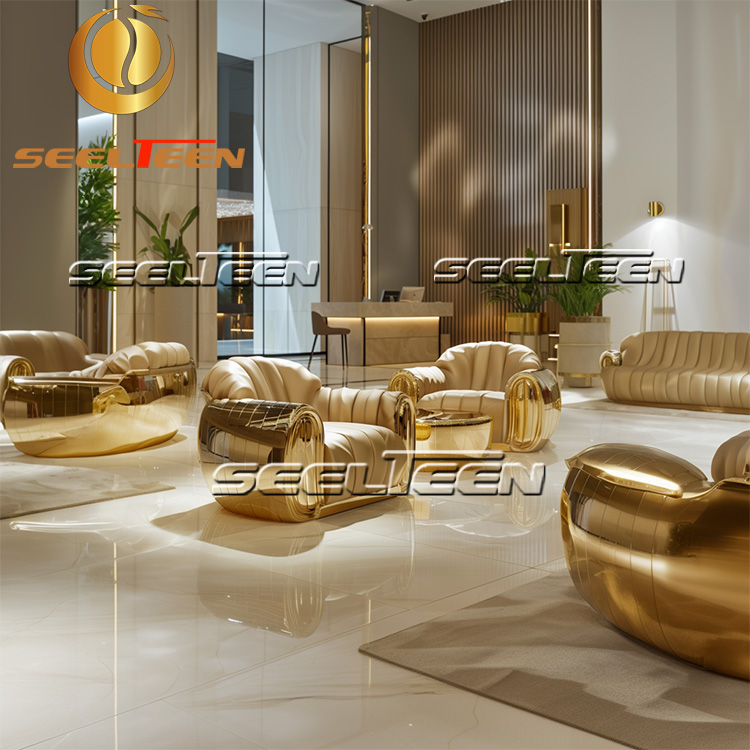
A mirror finish is polished until the surface reflects like glass. It’s striking in a lobby, a lounge, or a showpiece table, and it bounces light around a room in a way nothing else does.
The price is upkeep. Fingerprints, water spots, and scratches show clearly. Weld seams and surface flaws show too, which means a mirror finish only looks good if the polishing and weld finishing are excellent. A mediocre job looks worse in mirror than it would in brushed.
Mirror works best on pieces that guests see more than touch. For a dining table that gets wiped every few minutes, ask yourself whether the staff will enjoy keeping it perfect.
Sandblasted and Textured: Quiet and Forgiving
Sandblasted or bead-blasted surfaces have a soft, non-directional matte texture. They hide fingerprints well and have no grain direction to match, which makes them easy to coordinate.
The texture can hold onto oils and grime a bit more than a smooth surface, so cleaning may take slightly more effort. Some factories also offer patterned or vibration-style textures, which give a subtle, random pattern. Ask to see a physical sample, because these finishes photograph very differently from how they look in person.
PVD Color: Gold, Rose Gold, and Beyond
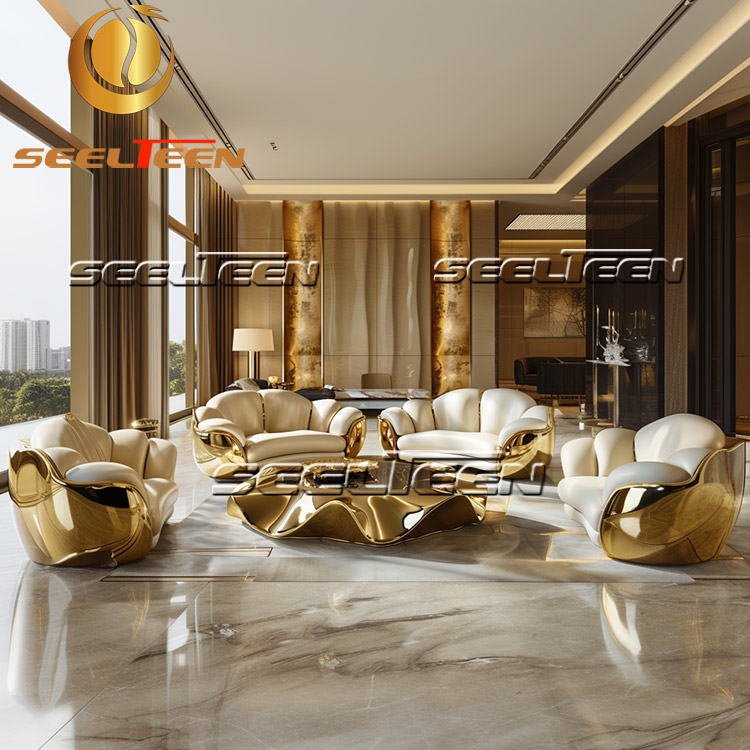
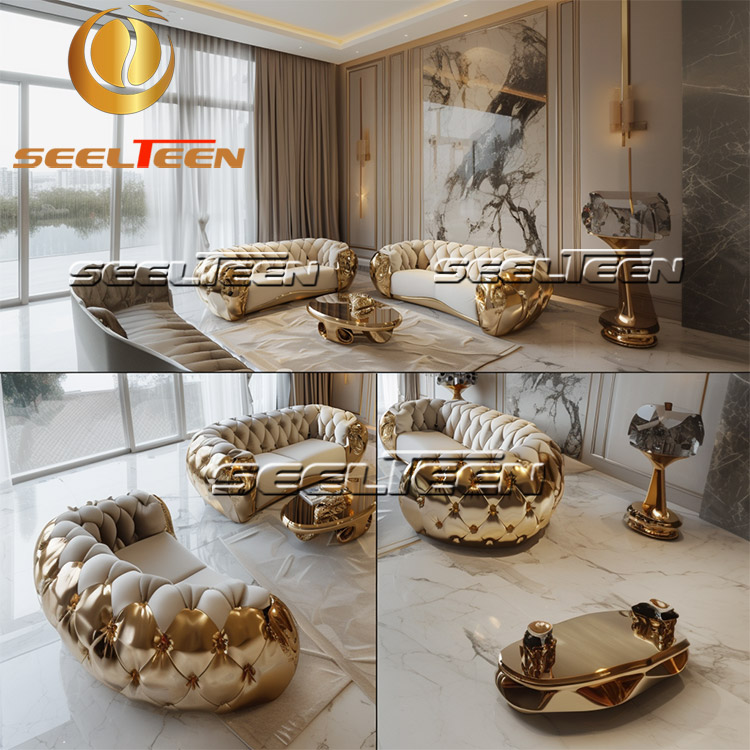
When stainless steel comes in gold, rose gold, champagne, bronze, or black, it’s usually finished with PVD, short for physical vapor deposition. In a vacuum chamber, a thin layer of metal compounds is deposited onto the steel, and that layer creates the color.
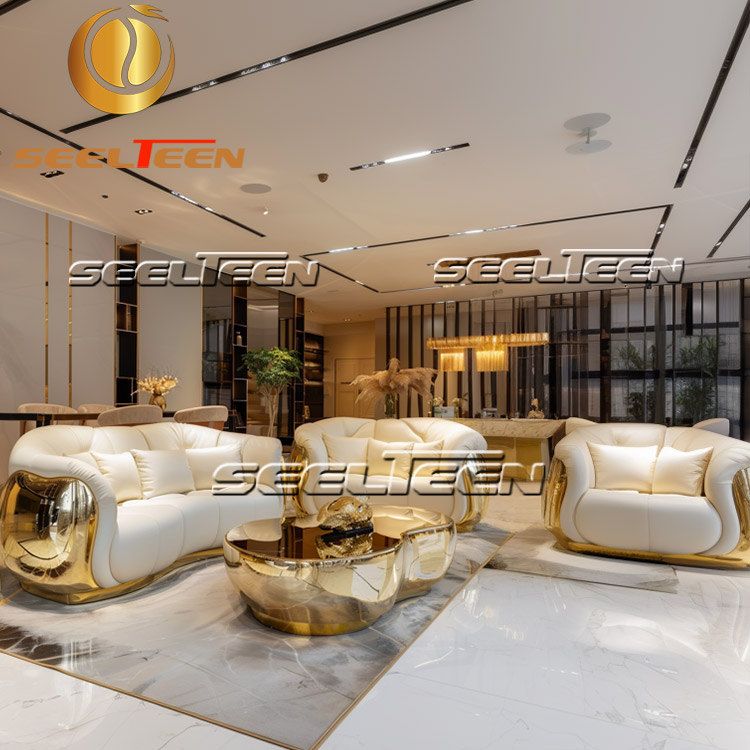
A few things are useful to know. It isn’t real gold. The color comes from the coating. PVD is generally harder and more wear-resistant than ordinary paint, which is part of why it’s popular on hardware, trims, and furniture frames. And it can be applied over different surfaces, so you can have gold in a brushed look, a mirror look, or a textured look. The surface underneath changes the mood a lot. Brushed gold feels warm and understated. Mirror gold feels bold.
The catch is repair. A deep scratch through a PVD layer isn’t something a cleaner fixes, and touching it up locally is difficult. Ask how the factory handles damage and whether replacement parts can be re-coated to match.
Grade Matters Under Every Finish
A good finish on weak steel won’t save the piece. Ask which stainless steel grade is used. The common furniture grades behave differently: 304 is widely used and resists corrosion well, while cheaper grades can rust or stain sooner, especially in humid or coastal places. Properties near the sea may want to ask about higher-grade options for the most exposed pieces.
The finish and the grade work together. If a supplier can’t tell you the grade, treat that as a warning.
What to Ask For Before You Approve a Batch
A physical sample. Screens lie about metal. Get the actual finish in your hands, under the lighting your room will have.
Scratch and wear checks. Run a key lightly across a sample, and see how it handles a wipe with a damp cloth. It’s not a lab test, but it tells you something.
Batch consistency. Colors, especially PVD tones, can vary slightly between production runs. Approve a reference sample, keep it, and ask that the whole order be finished from the same batch.
Weld and edge quality. Look at where parts join. Seams should be ground and finished cleanly, and edges shouldn’t be sharp.
Shipping protection. Ask how surfaces are protected in transit. A beautiful finish that arrives scratched is a problem for everyone.
Care: Keep It Simple
For most stainless steel finishes, a soft cloth with mild soap and water does the job. Wipe along the grain on brushed surfaces. Avoid steel wool, abrasive pads, and harsh bleach or chlorine cleaners, which can dull or mark the surface. For coated or colored finishes, check the care guidance for that specific finish and follow it.
A simple written cleaning instruction for housekeeping, sized for a one-page card, prevents most damage.
Choosing a Finish for the Space
A rough guide, not a rule. Brushed suits high-touch pieces like dining tables and bar tops. Mirror suits feature pieces and low-contact accents. Sandblasted suits spaces where low maintenance and a calm look matter. PVD color suits properties with a strong palette, used on frames, bases, and accents where it can be admired without constant handling.
Many hospitality projects mix them: a brushed table with a gold PVD base, for example. Mixing is fine if the tones are chosen together and checked as samples side by side.
Frequently Asked Questions
Is gold stainless steel furniture made of real gold? No. The gold color usually comes from a PVD coating applied to stainless steel in a vacuum process, not from real gold.
Which finish hides fingerprints best? Brushed and sandblasted finishes hide fingerprints far better than mirror, which shows nearly every mark.
Can a scratched PVD finish be repaired? Light marks may be cleaned, but a deep scratch through the coating is hard to repair locally. Ask the factory how damaged parts can be re-coated or replaced.
Does the finish affect corrosion resistance? The base grade matters most for corrosion. A finish can protect or change the surface, but it doesn’t replace a good grade of stainless steel.
How do I make sure finishes match across a large order? Approve a reference sample, keep it, and ask that the full order be finished from the same batch. Compare new pieces against the sample on delivery.
Where This Fits at Seelteen
Foshan SeelTeen Furniture Co., LTD. was founded in 2015. The office, factory, and exhibition hall cover 12,000 square meters, and the company makes stainless steel hotel, villa, and restaurant furniture to project specifications. The stainless steel Quality Dining Room Tables are a good place to start if you want to see the material in use. For a finish that suits your project, contact Seelteen and ask which finishes are available for your pieces, then request physical samples before you decide.
Welcome to contact us to get the latest price list!
Do you need to read another article? Please click on this: Furnishing a Full Hotel: One Design Language
Please find us on Facebook and Instagram, and don’t miss a single update