Wine Cabinet Buying Guide: Glass Door vs Open Shelf Display for Home Bars
A wine cabinet does two jobs at once that don’t always pull in the same direction. It has to store bottles properly, and it has to look good doing it — often as the centerpiece of a home bar or villa living space where guests are meant to notice it. Glass door and open shelf designs solve that balance differently, and picking between them usually comes down to how the space actually gets used rather than which one photographs better.
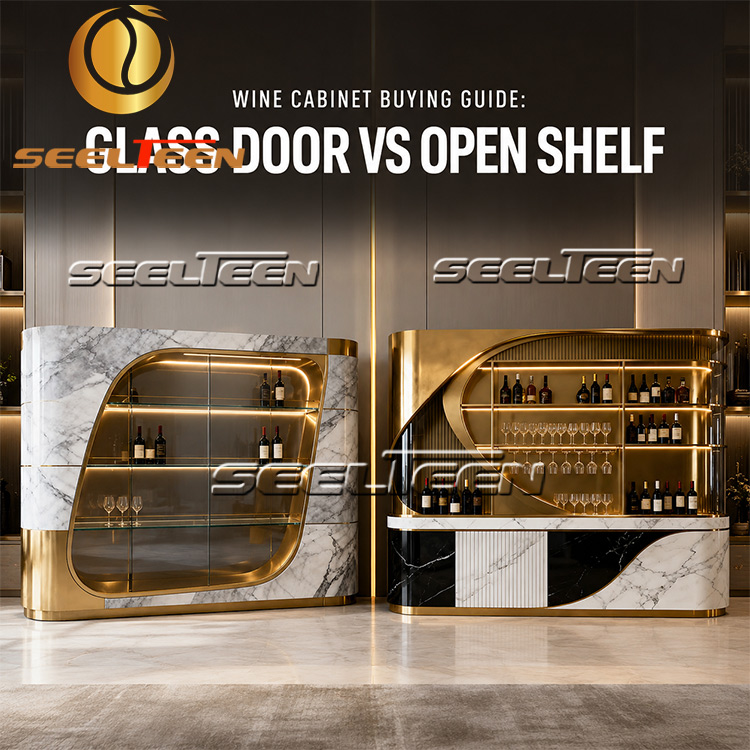
Glass Door Cabinets: Controlled Display
A glass front keeps bottles visible while adding a layer of protection — dust stays out, and depending on the glass type, some UV exposure gets filtered too, which matters more than people realize since direct light degrades wine over time.
The look tends to read as more formal and finished, which suits villa dining rooms, hotel lounges, or any space where the cabinet needs to feel like a built-in piece of furniture rather than open storage. Tinted or smoked glass options exist for spaces that want the display effect without full visibility, and some designs pair glass doors with interior lighting, which makes the bottles genuinely the visual focus of the room after dark.
The trade-off is upkeep — glass shows fingerprints and dust in a way open shelving doesn’t, so it needs more regular cleaning to stay looking sharp. It also adds a small amount of cost and design constraint, since the hardware and hinge quality on the doors matters for how the piece holds up over years of daily use.
Open Shelf Cabinets: Accessibility and a Different Kind of Display
Open shelving skips the glass entirely, which changes the feel of the piece. Bottles are fully accessible without opening anything, which matters in a home bar setting where people are grabbing bottles frequently rather than admiring them from a distance. It also tends to look more relaxed and contemporary — less “formal wine room,” more “part of the everyday living space.”
Without a door, there’s no barrier against dust, so open shelving needs more frequent wiping down, and there’s no UV protection either, which matters if the cabinet sits anywhere near a window. It works best in spaces without direct sunlight and where the bottles are getting rotated through regularly rather than sitting for years.
Open designs also tend to be a bit more forgiving to manufacture and customize — different shelf spacing, mixed storage (bottles alongside glassware or decanters), and asymmetrical layouts are easier to work into an open frame than a sealed glass unit.
Frame and Base Material Matters Here Too
The same logic that applies to sofa frames applies to wine cabinets, just at a smaller scale. A stainless steel or metal-accented frame holds up better in humid environments and gives the piece a more contemporary, hospitality-appropriate look, especially when it’s paired with gold or brushed finishes that match other metal furniture in the space. Solid wood frames lean warmer and more traditional, which suits certain villa interiors better, but the same humidity sensitivity that applies to wood sofa frames applies here.
For a hotel lounge or bar area getting used constantly, metal-framed construction generally holds its finish and structural integrity longer than an all-wood piece under the same conditions.
Sizing and Placement Questions Worth Asking Before Ordering
- How many bottles does the space realistically need to store, versus how many are for display?
- Will the cabinet sit near a window or other direct light source? If so, glass with UV filtering is worth prioritizing.
- Is this a standalone piece or built into a larger bar or dining wall unit? That affects whether custom sizing is needed rather than a standard cabinet width.
- Does the space call for temperature control, or is this purely a display and storage piece rather than a wine fridge?
That last point trips people up sometimes — a wine cabinet and a wine refrigeration unit are different products, and it’s worth being clear early on which one a project actually needs, since combining both into a single custom piece is possible but changes the build significantly.
Bottom Line
Glass door cabinets suit spaces that want a more polished, protected display and don’t mind the extra cleaning. Open shelving suits spaces where accessibility and a more relaxed look matter more than protecting bottles from dust and light. Either way, frame material affects how well the piece holds up in the space long-term, which is worth considering alongside the door style itself.
If you’re planning a wine cabinet for a specific space, send over the dimensions and intended bottle count and we can talk through which configuration fits best.
Welcome to contact us to get the latest price list!
Do you need to read another article? Please click on this: Genuine Leather vs PU Leather Sofas
Please find us on Facebook and Instagram, and don’t miss a single breath